Live business advisors standing by Toll Free
 888-893-2993 (M-F, 7AM - 4PM PST)
Schedule a demonstration of how to automate your prospecting
Schedule Now
Live business advisors standing by Toll Free
888-893-2993 (M-F, 7AM - 4PM PST)
Schedule a demonstration of how to automate your prospecting
Schedule Now
Last Updated: September 14, 2026
 A high intent insurance prospect is someone whose recent actions show they are actively comparing policies or requesting quotes, not just reading about coverage. This guide shows how to find those buyers in the 50+ market and move them into your pipeline.
The distinction matters. A browser reads an article about term life insurance and leaves. A buyer requests a quote, enters a phone number, and checks back within days, a high intent insurance prospect with a decision already in motion.
Below, we’ll show how to separate the two, build a funnel that attracts buyers, and filter out tire-kickers before they eat your week.
Intent shows up in behavior before it shows up in conversation. A prospect who requests a quote, downloads a policy comparison, or returns to your landing page three times is signaling a purchase decision in progress.
Watch for these signals:
Most guides treat all leads as equal. They aren’t. A prospect who fills out a full quote request behaves differently from one who clicks a headline and leaves.
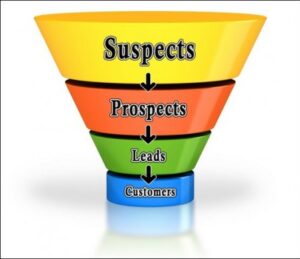 The best lead generation for insurance agents combines organic content, paid search, and a clear path to a quote request. Each channel feeds the same funnel, so a blog reader can convert through a paid ad later.
Start with the structure, then layer channels on top:
That sequence keeps acquisition cost predictable and shows which channel produces real buyers.
Long-tail keywords carry the search intent closest to a purchase. Phrases tied to a specific need, like coverage for a certain age or a rollover question, attract prospects already comparing options.
Build content around questions prospects actually type. A page answering a narrow coverage question out-converts a broad “life insurance” page, because the visitor arrived with a decision in mind.
Match content to the customer journey stage: early-stage readers want education, late-stage readers want numbers, comparisons, and a call-to-action. Give each group its own page.
 Paid Search, Digital Ads, and Negative Keyword Strategy
Paid search reaches prospects at the moment they search. Digital ads on social platforms create demand rather than capture it.
Most agents skip the negative keyword strategy. Without it, your budget drains on clicks from job seekers, students, and researchers who will never buy.
Add negatives for terms like “jobs,” “salary,” “free,” and “definition.” Review your search terms report weekly and block anything that doesn’t match a buyer, this protects your click-through rate and budget.
Insurance lead qualification criteria are the rules you use to score a prospect before investing time in a call, turning a raw list into a ranked sales pipeline.

Set criteria before leads arrive. Score each prospect on urgency, budget signals, and contact completeness, a full address and phone number signals more seriousness than an email alone.
Most guides stop at “use BANT.” That’s a definition, not a system. Here is a scoring model you can drop into a spreadsheet or CRM today. Score every inbound lead across five dimensions, each on a 1-5 scale, for a maximum of 25 points.
| Dimension | Score 1 (cold) | Score 3 (warm) | Score 5 (hot) |
|---|---|---|---|
| Timeline | “Someday” / no date | Within 90 days | Within 30 days |
| Trigger event | None stated | Planning stage (reviewing options) | Live event (retirement, rollover, loss of spouse, new dependent) |
| Contact completeness | Email only | Email + phone | Email + phone + mailing address + best time to call |
| Product specificity | “Life insurance” | Named product type (term, final expense, IRA rollover) | Named product + coverage amount or budget range |
| Engagement depth | One page view | Multiple sessions or content download | Quote request + reply to follow-up |
Agents who track this find leads scoring 20+ close at a materially higher rate than those under 12, which is why the routing threshold matters more than the raw score. Treat the numbers as a starting point and recalibrate after 90 days of your own data.
BANT and MEDDIC are enterprise sales frameworks that translate well to insurance. BANT covers Budget, Authority, Need, and Timeline; MEDDIC adds metrics, economic buyer, decision criteria, and identified pain.
For insurance, timeline does the heaviest lifting: a prospect who needs coverage this month is worth ten who “might look into it next year.” Pair that with need (a life event, a rollover, a new dependent) and you have a workable score. Refining these signals into a repeatable process requires integrating these high-intent indicators into your broader client acquisition strategies to ensure that every outreach effort is focused on the most promising opportunities.
MEDDIC earns its keep in the “economic buyer” and “decision criteria” fields. A 62-year-old shopping for final expense coverage is usually the buyer and decision-maker; a 45-year-old shopping for family term often is not, a spouse or financial advisor weighs in. Capturing that early prevents quoting a policy to someone who can’t say yes.
A score with no routing rule is just a number. Map scores to actions:
Two failure modes are common. First, scoring too many dimensions, agents who track 12 variables rarely update them, and a stale score is worse than none. Second, treating the score as permanent: intent decays, so a lead that scored 22 three weeks ago and hasn’t opened an email since is now a 9. Re-score on every meaningful engagement event, not once at intake.
Insurance sales scripts for warm leads should open with the prospect’s own request, not your pitch, a warm lead already raised a hand, so the call continues that conversation.
Open by referencing the quote request: “You asked about coverage for a rollover. I have two options that fit what you described.” Then ask one qualifying question and listen.
Keep the script short. Warm leads convert on relevance, not pressure. Lead with the specific product they inquired about, confirm the timeline, and offer a clear next step.
Lead generation tools for financial advisors only pay off when they connect to a CRM. A lead that sits in an inbox without follow-up decays fast, the silent killer of conversion rate.
Automate the first response. A prospect who requests a quote expects contact within minutes, not days. Set a trigger that sends a confirmation immediately and routes the lead to the right agent.
Use lead scoring inside the CRM to rank prospects as they engage. Every email open, page visit, and reply updates the score, so your pipeline reflects real intent rather than a static list.
Insurance is a comparison-shopping category. When a prospect submits a quote request, they typically submit to more than one source. The agent who responds first wins a disproportionate share of those conversations, not because they are better, but because they got there while the prospect was still at the kitchen table with the laptop open.
A common benchmark is first contact within five minutes of form submission (The Short Life of Online Sales Leads). After an hour, contact rates drop sharply; after a day, the prospect has often spoken with two or three competitors. This is the highest-leverage automation you can build, and it costs almost nothing.
You don’t need an enterprise stack, just four things wired together:
Lead decay is not a metaphor, it is a measurable drop in contact and conversion rates as time passes between the prospect’s action and your response. Slow it with triggers:
That last trigger is the one most agents miss. A prospect who went quiet in March and returns in June to view a rollover page is a fresh high-intent lead, not a stale record. If your CRM doesn’t surface that event, you’ll never call them.
For a solo agent or small agency, you need a CRM with native form capture, SMS, and task automation. For a team, add routing rules, manager escalation, and speed-to-lead reporting by agent. The failure mode is buying 40 features and using four. Pick the stack that closes the five-minute gap first, then layer scoring and nurture on top.
Landing page optimization is where most funnels leak. A strong ad pointing to a weak page wastes the click. Keep the page focused on one action: the quote request.
Life events drive insurance purchasing more than any ad. A retirement, rollover, marriage, new grandchild, or loss of a spouse pushes a prospect to review coverage. Retirement Prospects delivers exclusive, zip-code-specific contacts in the 50+ demographic, so agents reach buyers at the moment of decision.
Match your page to the event: a rollover page should speak to IRA and 401k questions, a life insurance page to coverage for a specific age and health situation. Relevance drives the quote request.
Compliance is not optional when you buy or generate leads. The Telephone Consumer Protection Act governs how you contact prospects, and violations carry real penalties (the FTC).
Follow these rules:
The FCC rules on robocalls and the TCPA set the federal baseline for contact consent. Review them before you dial a purchased list.
High intent insurance conversion dies from slow follow-up, weak qualification, and generic messaging. Fix the process and the same leads produce better results.
The most common mistakes:
A common mistake is buying volume over quality. Exclusive leads mean the prospect isn’t fielding calls from five other agents.
A high intent insurance prospect has shown specific buying signals: a recent quote request, a life event like retirement or a new dependent, or repeated visits to policy comparison pages. They have a clear timeline and a stated need. Low-intent prospects browse without urgency. Tracking search intent, click-through rate, and form completion behavior separates the two groups before you spend time on calls.
Paid search and digital ads capture prospects actively searching for coverage. Organic traffic from long-tail keywords builds a slower but cheaper pipeline. Referral programs and retargeting bring back visitors who already showed interest. For advisors targeting the 50+ demographic, exclusive zip-code-specific lead sources often outperform shared marketplaces because the prospect has not been contacted by five other agents that same day.
Aged leads are older contacts, often 30 to 90 days past their initial inquiry, and lead decay means many have already purchased or lost interest. Real-time leads arrive within minutes of a quote request, when purchase decision momentum is highest. Real-time leads cost more per contact but typically produce a higher conversion rate because you reach the prospect while they are still comparing insurance policy options.
Use a lead scoring framework that weighs recency, stated timeline, coverage type, and engagement depth. Ask direct questions early: what prompted the search, whether they have a current policy, and when they want coverage to start. Apply BANT or MEDDIC criteria to score each prospect. Leads that score below your threshold go into lead nurturing sequences instead of your active sales pipeline.
The real challenge isn’t finding prospects. It’s reaching the right ones before they decide, with follow-up fast enough to matter. Retirement Prospects helps advisors and agents do exactly that, with exclusive zip-code-specific prospects in the 50+ market, guaranteed valid contact data, and a replacement lead whenever a record is invalid. There’s no commitment, and you pay only when you start receiving clients. Schedule a demonstration and see how automated prospecting fits your practice.